
Lumpkin Weekly Arrest Report Sources
One source stands out for multi-day coverage: the FetchYourNews Lumpkin arrest-report category. Each report covers seven days. FetchYourNews says the arrest reports and photographs come straight from the Lumpkin County Sheriff's Office. An August 2026 report spanned August 16 to 22. That structure suits week-by-week review of Lumpkin County arrests. Just remember what the site is. FetchYourNews publishes news; it is not the sheriff's live custody database, so its arrest entries behave like journalism rather than official record keeping. A news item can stay online long after release. The sheriff roster, by contrast, reflects current custody only. A weekly article can also miss a late arrest, run after its window closes, or keep a charge that a court later changes.
Read Lumpkin Arrest Logs Carefully
Check the dates in the report heading first. Ignore the web page's publication date. Then read items as the publisher lists them. The weekly format groups names, age, residence or locality, and charges alongside report imagery, all journalistic reproductions of arrest information. None of it tells you whether the person is still sitting in Lumpkin County Jail.
- Open the report category and select the week that contains the date of interest.
- Confirm the report’s start and end dates before looking for a name.
- Read age or locality only as supporting detail, not conclusive identity proof.
- Treat charges as charges recorded for that reporting period.
- Check the official sheriff roster for present custody or request the source record from LCSO.
Need same-day status instead? The Daily Arrest Report page explains the current roster's role. Lumpkin County has no separate 24-hour feed, so the official roster serves as the fallback.
Lumpkin Arrest Log Entry Fields
Weekly news items and roster rows differ. Describe the publisher's format on its own terms. Details missing from an article may still sit in an underlying sheriff arrest report. The same goes for an inmate record or a later court file.
| Weekly report element | How to interpret it |
|---|---|
| Report date range | The group of days covered, often seven days in the recurring FetchYourNews format. |
| Name | The person named in the republished arrest material; verify identity against the official source. |
| Age | Age reported for that entry, which can help distinguish similar names. |
| Residence or locality | The place printed with the entry, not necessarily the arrest location. |
| Charges | Charges reported from booking material, not a conviction or final case result. |
| Report image | Publisher-presented imagery attributed to LCSO; no photo is guaranteed for every entry. |
Don't fill in blanks. Some fields should never be guessed when absent. Those include arresting agency, exact booking time, bond, release details, and court outcome. The official Lumpkin roster does label arrest date, held-for agency, release date, and hold reasons where present. A full records request can return more, subject to Georgia law and lawful withholding.
Two Lumpkin Arrest Publication Rhythms
Lumpkin County reporting moves on two rhythms. FetchYourNews keeps a recurring category with page depth. The individual weekly reports it publishes are attributed to the LCSO. The Dahlonega Nugget's local newspaper site takes the newspaper route. Its Crimebeat arrest material runs in printed issues. A January 2024 issue listed arrests from January 7 through January 13 by day. It then appeared in the January 17 issue. That date gap reflects the newspaper cycle, not a delay in the jail's own records.
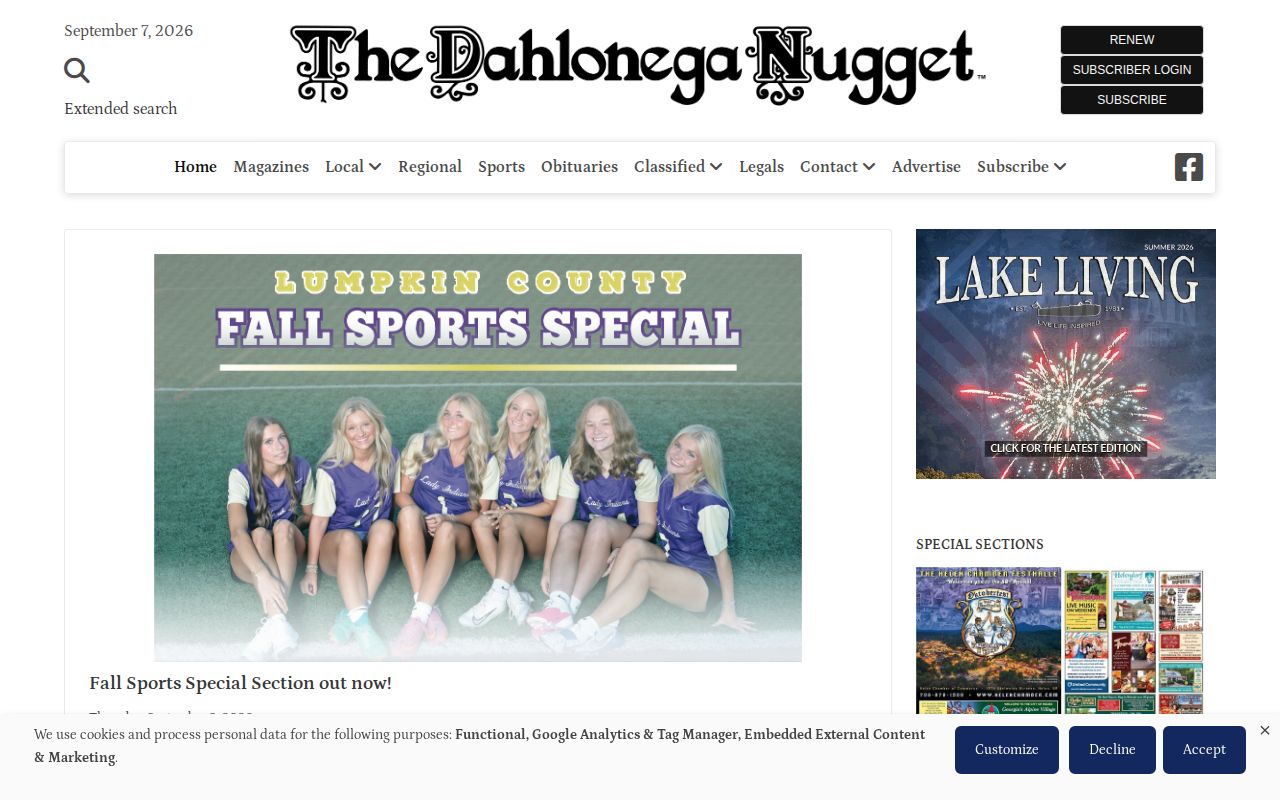
The paper is good for older weeks. It also adds local context. Custody and case outcomes still belong to the Sheriff's Office and the courts. Photos are another matter. Neither outlet promises a booking photo with every arrest entry. There is no face gallery to browse. Count on the sheriff and the courts for the final word.
Weekend Lumpkin Arrest Log Gaps
A seven-day report naturally blends weekends into its period. That grouping has limits. The close of a weekly window can split related events across two articles. A Sunday arrest near the cutoff may show up in the next cycle. Holidays can shift a newspaper's schedule too. Neither LCSO nor the publishers offer a fixed holiday posting rule. So no precise promise holds. Never treat a missing name as proof no arrest occurred. Check the adjacent weekly report. Try the outlet's archive search, and compare the current sheriff roster if custody may continue. Released before your search? Request the underlying arrest or inmate record. These routes answer different questions and can show different sets of names.
Note: Article dates show when publishers posted their pages; they do not certify when LCSO completed or released each booking record.
Lumpkin Arrest Archives and Retention
Old arrest news lingers in two places. FetchYourNews keeps a category archive running many pages deep, and The Dahlonega Nugget preserves its past issues. Both help you find a name or a date. Neither one sets county policy, though. A newspaper can edit or drop a story under its own rules, and the inmate roster stops showing a person once custody changes.
For official records, file an LCSO Open Records request. The form covers arrest reports, inmate information, and case dispositions. Georgia's retention schedule sets the clocks. Booking records stay ten years after release, and jail registers stay ten years after the last entry. Investigation logs last three years after release. Prisoner holds run two years after release to the requesting agency, while transfer or extradition records run five. None of that guarantees a booking photo stays viewable that long. Restrictions, litigation holds, system migration, and lawful destruction can all shorten a file's life. So ask by name, date range, and record type. Precision speeds the search. The Lumpkin County records policy promises a response, records, a cost estimate, or a production timetable inside the three-business-day window.
Unofficial Lumpkin Arrest Archives
Start with the official record. The sheriff roster controls current custody. LCSO holds its own arrest and inmate files, and the court file decides the outcome. Private archives still have a role. They can pin down a date or a spelling. But a cached page may be stale or clash with later official action. The Georgia Gazette's Lumpkin section is one such independent archive. It tracks arrests and later court developments. It says it pulls records through Georgia's Open Records Act.
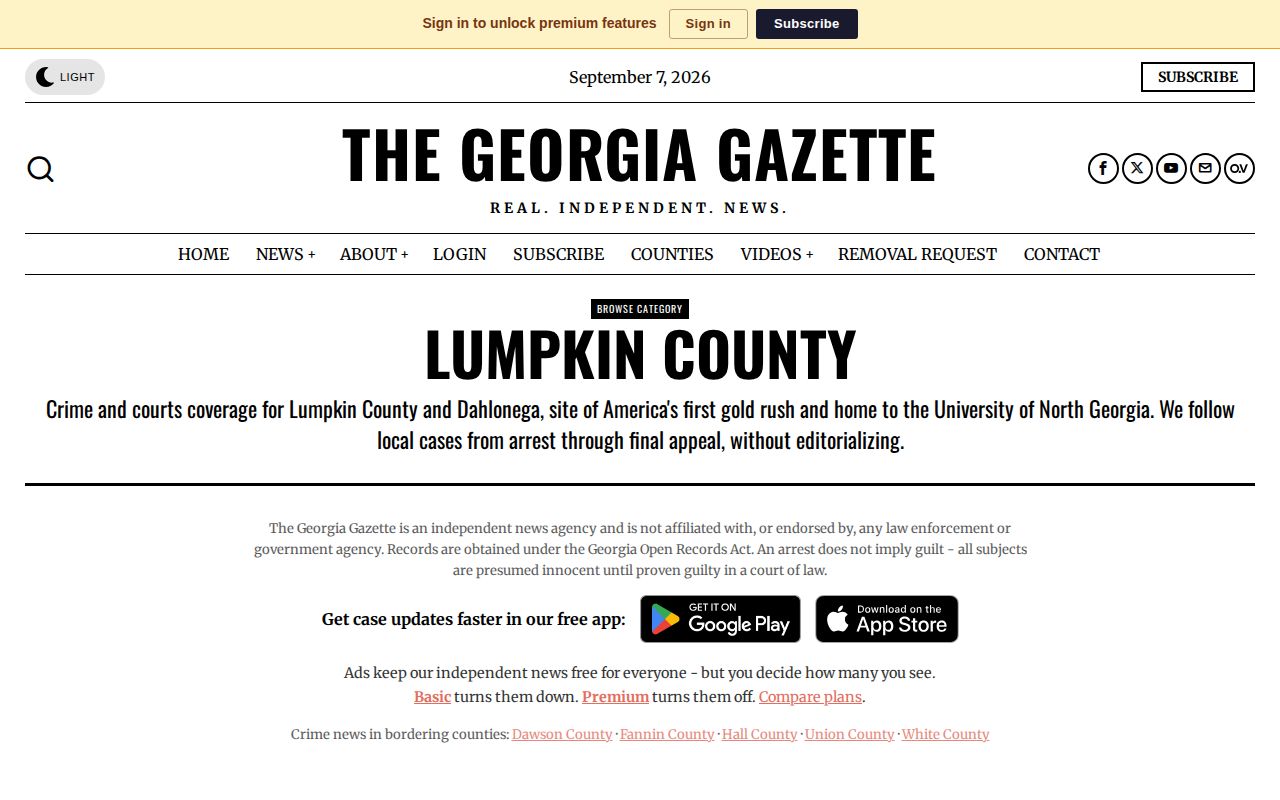
Treat an archive as a lead. LCSO records and the court docket settle any conflict. RecentlyBooked's Lumpkin section shows an unofficial last-30-days view with names and booked dates. Its photo coverage is patchy. Nothing there overrides the official roster's rules on booking images.
A commercial arrest page is a secondary lead only. It can't verify current custody or stand in for the official record.
Lumpkin Arrest Trends Need Dates
Lumpkin County and Dahlonega both publish activity statistics. Neither set works as a live person-level arrest log. LCSO's dated 2021 statistical report counts bench warrants, overdoses, search warrants, and shoplifting. Dahlonega's department page posts monthly police reports. Those summaries cover a fixed reporting period. They can't tell you who sits in the jail today or who showed up in a later weekly blotter.
The University of North Georgia daily crime log adds a narrow campus layer. It spans a rolling 60-day window. Entries may note an agency assist or a closing such as "closed by arrest." Names and booking photos rarely appear. Campus incidents are not the Lumpkin County arrest log. Trend reports answer broad questions about volume. A weekly arrest report names people in a publisher's chosen window, the roster shows current custody, an open records request retrieves agency files, and the court file gives the final result. Keep those layers apart and a statistic will never pass for someone's case history.
Lumpkin Arrest Logs Are Not Verdicts
A weekly blotter records the charges tied to an arrest. Cases move after that. Charges get reduced, dismissed, nolle prossed, or tried. "Nolle prossed" means the prosecutor declined to pursue the charge at that point.
The Lumpkin Superior Court Clerk keeps the criminal files for that court. Georgia Courts runs an e-access directory. PeachCourt provides access to electronic filings and documents for courts that use it. Match your search to the right court.
Public Record Search
Sponsored Results