
Following Lumpkin County Recent Arrests
The sheriff's official Inmate Check is the county's one direct public custody tool. Think of it as a live snapshot rather than an archive. Lumpkin County publishes no fixed refresh interval. It sets no deadline for moving a booking from intake to the screen. There is no stated weekend rule. No online retention period appears either. A new arrest can sit in processing before it posts. A release can change what stays visible.
| Window | Route | Limit |
|---|---|---|
| Same day | Daily Arrest Report | No separate official 24-hour feed was found |
| Several days | Weekly Arrest Log | News can lag and is unofficial |
| Custody alerts | VINELink Inmate Check | Not a court or photo source |
The official sheriff page shown here links the county roster.
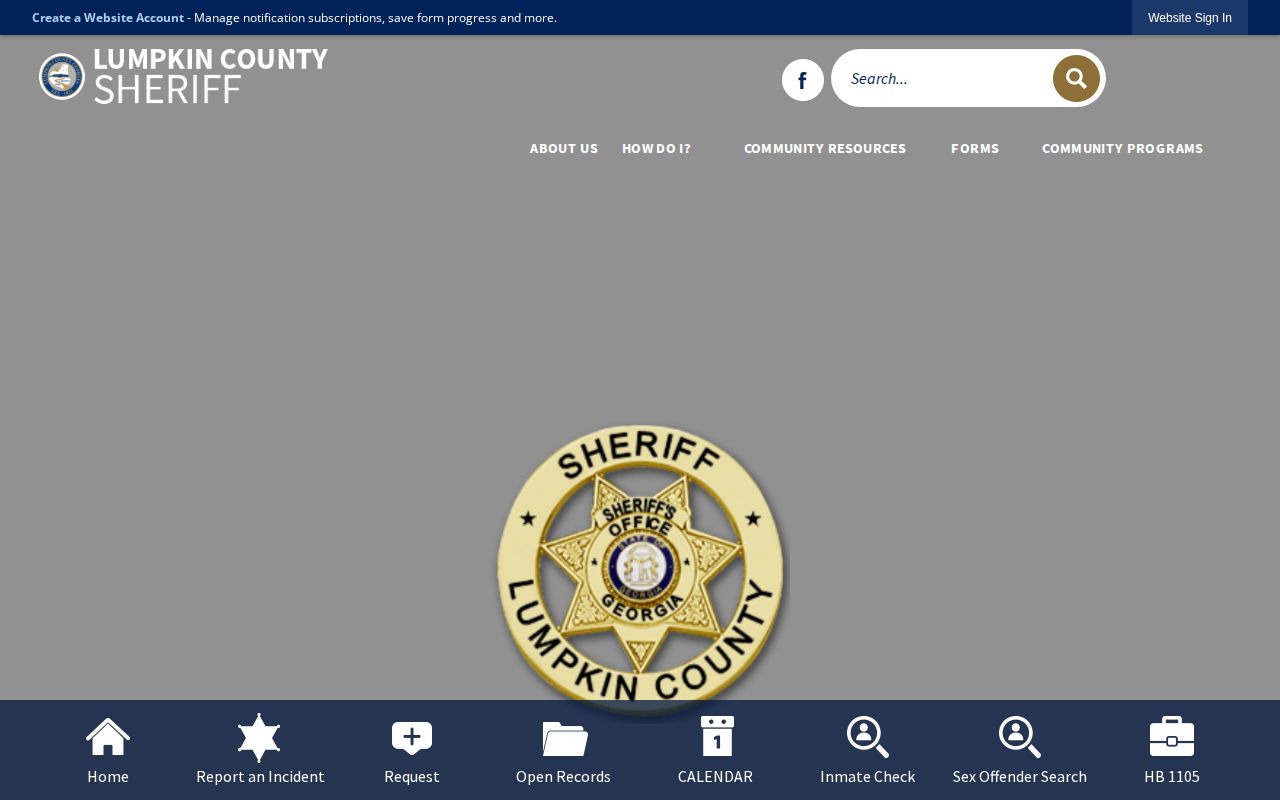
Starting there helps distinguish the government service from commercial directories.
Arrested Last Night in Lumpkin County
Start with the last name, then narrow with a first name or a date. An empty search does not mean no arrest happened. Intake delays can hide a booking from view. So can release, a hold by another agency, or a lawful publication limit. For questions about someone in the facility, call the jail at 706-864-0412. LCSO answers at 706-864-0414. On the roster, "Booked" marks intake. "Released" marks a custody change, not a dismissal. The Daily Arrest Report walks through the same-day search step by step.
The Lumpkin County Jail Roster
The Lumpkin County Jail, run by LCSO, sits at 385 East Main Street in Dahlonega. It also goes by the Detention Center. The roster lists Mugshot, Name, Race, Sex, Age, Arrest Date, Held For Agency, and Release Date for each person in custody. Some detail pages add hold reasons.
| Field | Meaning |
|---|---|
| Mugshot | Image if available, otherwise “No Image Available” |
| Name/demographics | Descriptive data; verify identity |
| Arrest Date | Use the portal’s label; do not silently call it booking date |
| Held For Agency | Agency tied to custody, not final case outcome |
| Release Date/holds | Changing custody information, not a disposition |
- Open Inmate Check from the sheriff page.
- Search surname first, then narrow.
- Compare date and agency before assuming a match.
- Inspect release and hold context.
- Request a missing or older record from LCSO.
The captured search interface illustrates the roster without reproducing a gallery.
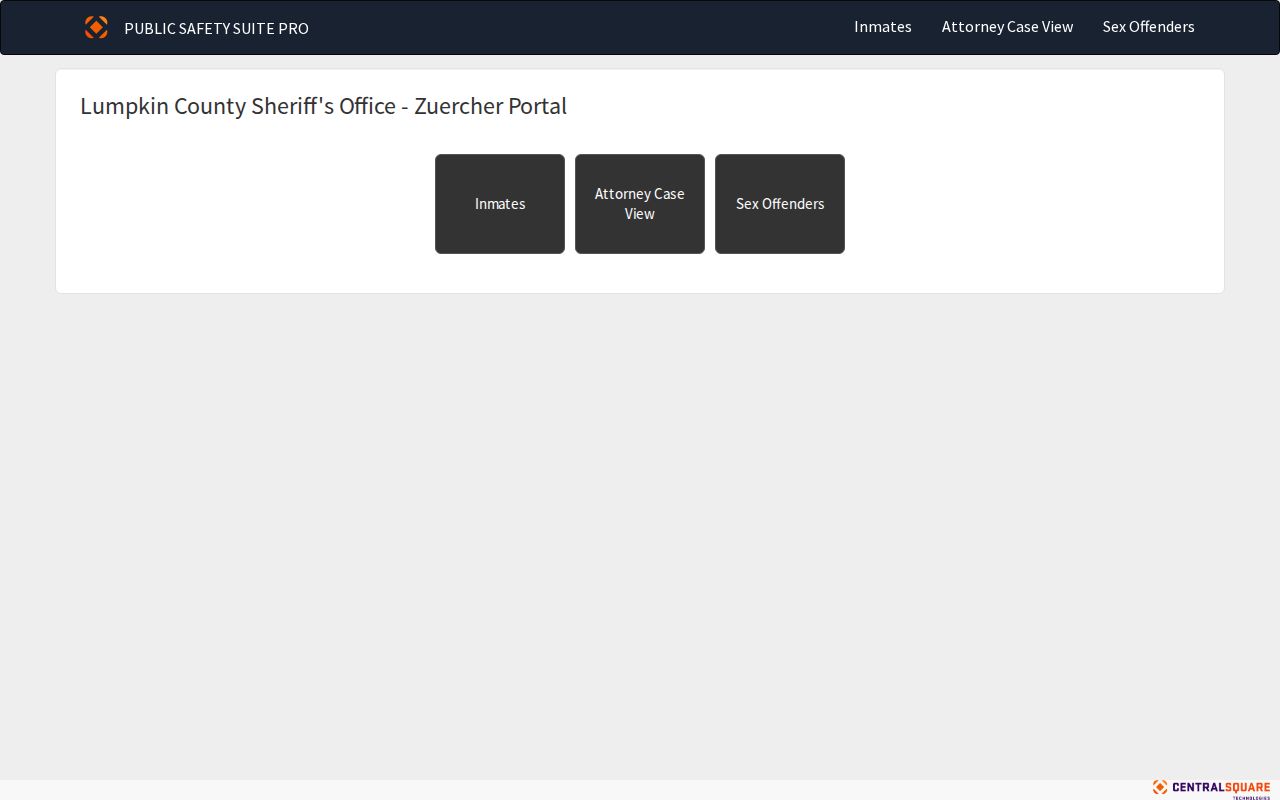
A blank image slot means only that no photo appears on the roster. The sheriff lists no booking app. Official social accounts post updates but do not promise a live arrest feed.
Where Lumpkin County Arrests Are Published
| Channel | Status | Use |
|---|---|---|
| Inmate Check | Official | Current custody; conditional photos |
| LCSO records | Official | Reports, inmate information, dispositions |
| FetchYourNews | News | Weekly LCSO-sourced reports |
| Dahlonega Nugget | News | Weekly Crimebeat archive |
| Georgia Gazette | Third party | County archive; verify |
| RecentlyBooked | Third party | 30-day lead; may be stale |
Official sources come first. A news story using sheriff material is still not a live jail database. Third-party sites like RecentlyBooked, Mugshots.com, and JailExchange can be incomplete or wrong, and Arrests.org, BustedNewspaper, and Mugshots.zone show no confirmed Lumpkin County section.
Dahlonega Recent Arrests
Dahlonega is the county seat and the only incorporated municipality with official arrest material. Dahlonega Recent Arrests covers city police records, monthly aggregate reports, the county roster, and UNG's separate 60-day campus incident log. The city itself publishes no daily arrest feed. It has no separate mugshot roster either.
What a Lumpkin County Arrest Record Shows
A full arrest record can carry the person's name, booking number, arrest date and time, and arresting agency. It may also list charges entered at booking, bond or holds, release details, court fields, facility information, and any legally releasable photo. The public list does not guarantee all of it. Charges may later be amended or dismissed. They may also be nolle prossed, tried, or resolved by plea. The roster's Release Date and hold reasons show custody facts. They do not show outcomes. For the later case, check the Superior Court Clerk, Georgia e-access, and PeachCourt.
Lumpkin County Arrest Photos and Mugshots
Booking photos do not always appear. Georgia law, O.C.G.A. §35-1-19, restricts when agencies can release booking photographs, which is why many Lumpkin County roster entries read "No Image Available." No photo galleries live here. The LCSO records request form lets a requester describe a wanted image, subject to that law and its exemptions. Someone held in state custody may appear in the GDC Find an Offender lookup, though many entries lack photos and a state image may differ from the county booking photo. Private sites often run stale, copied, or mismatched pictures. Check the official source first.
How to Obtain a Lumpkin County Arrest Record
- Choose LCSO for sheriff/inmate material, Dahlonega Police for a city incident, or the clerk for a case file.
- Supply date/time, location, case number if known, name, and a precise description.
- Use the LCSO form or current records specialist Christina Wise, 706-482-2634.
- Expect release, an exemption notice, or a timetable/cost estimate within three business days.
- Compare any booking file with the later disposition.
The first 15 minutes of staff time are free. Extra labor is billed at the lowest-paid qualified employee's rate, and copies generally run 10 cents per page. The county policy page spells out the official rules.
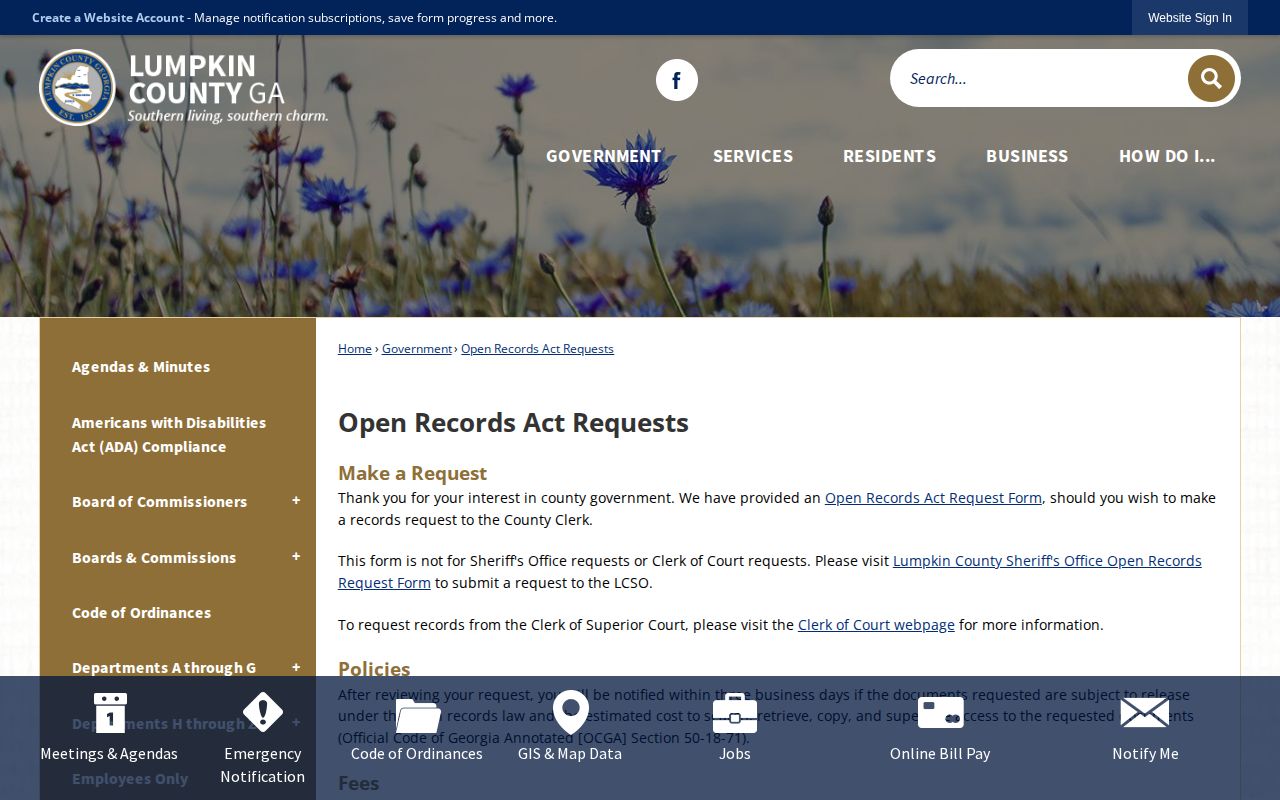
Put records requests in writing rather than through social media. For private-site listings, RecentlyBooked and Mugshots.com each describe free correction and removal paths. Those steps never change government records. Skip paid-removal services entirely. Once the source updates, stale search results can linger. Google's outdated-content tool can clear them.
Arrest Records and Georgia Law
Georgia open-records law gives agencies three business days to respond. Exemptions cover restricted, sealed, juvenile, privacy-protected, and active-investigation material. The county publishes no juvenile booking feed.
The Georgia Courts guidance pictured here explains record restriction and the arrest-date distinction.
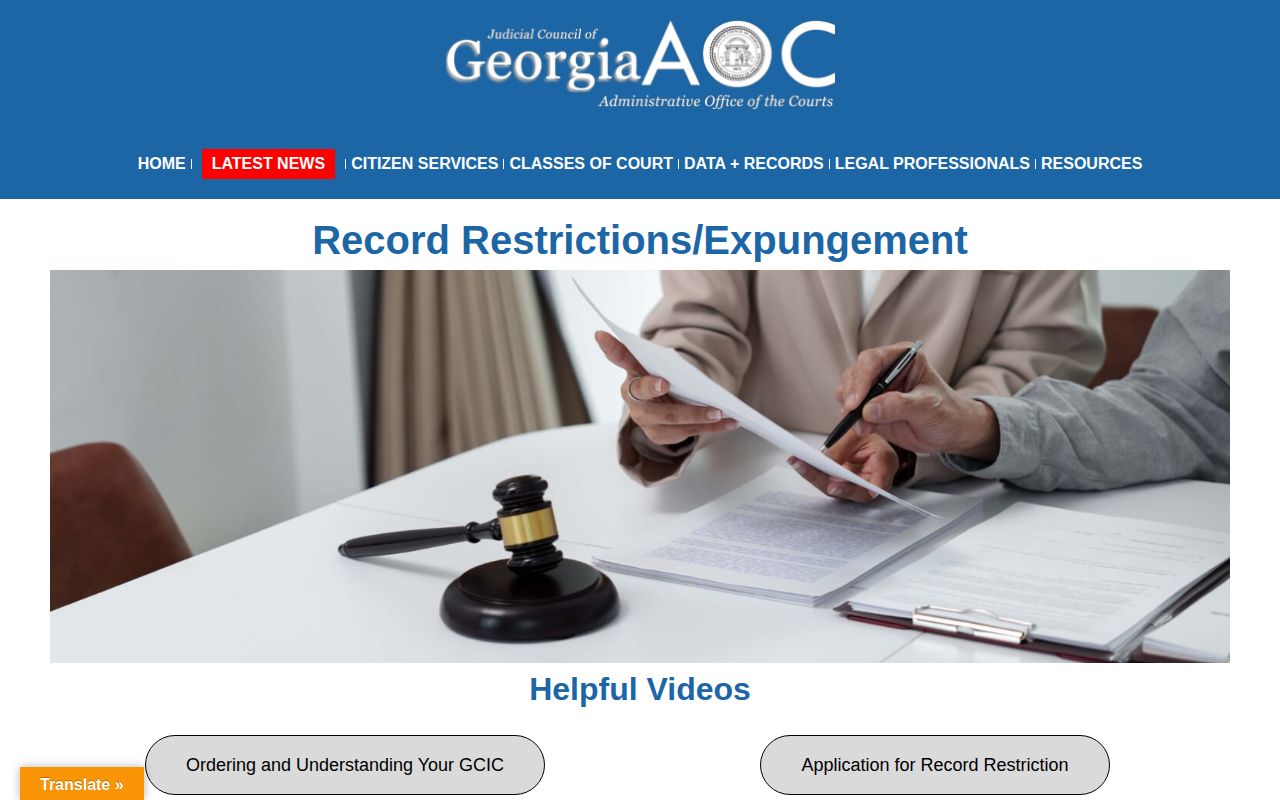
Georgia.gov estimates two to three weeks for a complete application, so verify eligibility and current fees there. Under O.C.G.A. §10-1-393.5, qualifying people may request commercial booking-photo removal at no fee, with a 30-day timeframe. That is legal information, not legal advice. Georgia Archives keeps jail booking records for 10 years after release and registers for 10 years after the last entry, though it does not guarantee each photo for that span. Start with LCSO, then the Archives county index. Lumpkin's preserved 1884 jail ran until 1964. The museum there is not a modern-photo archive. Dated LCSO annual and Dahlonega monthly statistics give trend context, not person-level current arrest totals.
Arrest Warrants and Most-Wanted Information
Lumpkin County has an official warrant-application process. It posts no online warrant checker. There is no most-wanted page, count, cadence, photo policy, or reward promise. The Magistrate Court page is the official contact for the process.
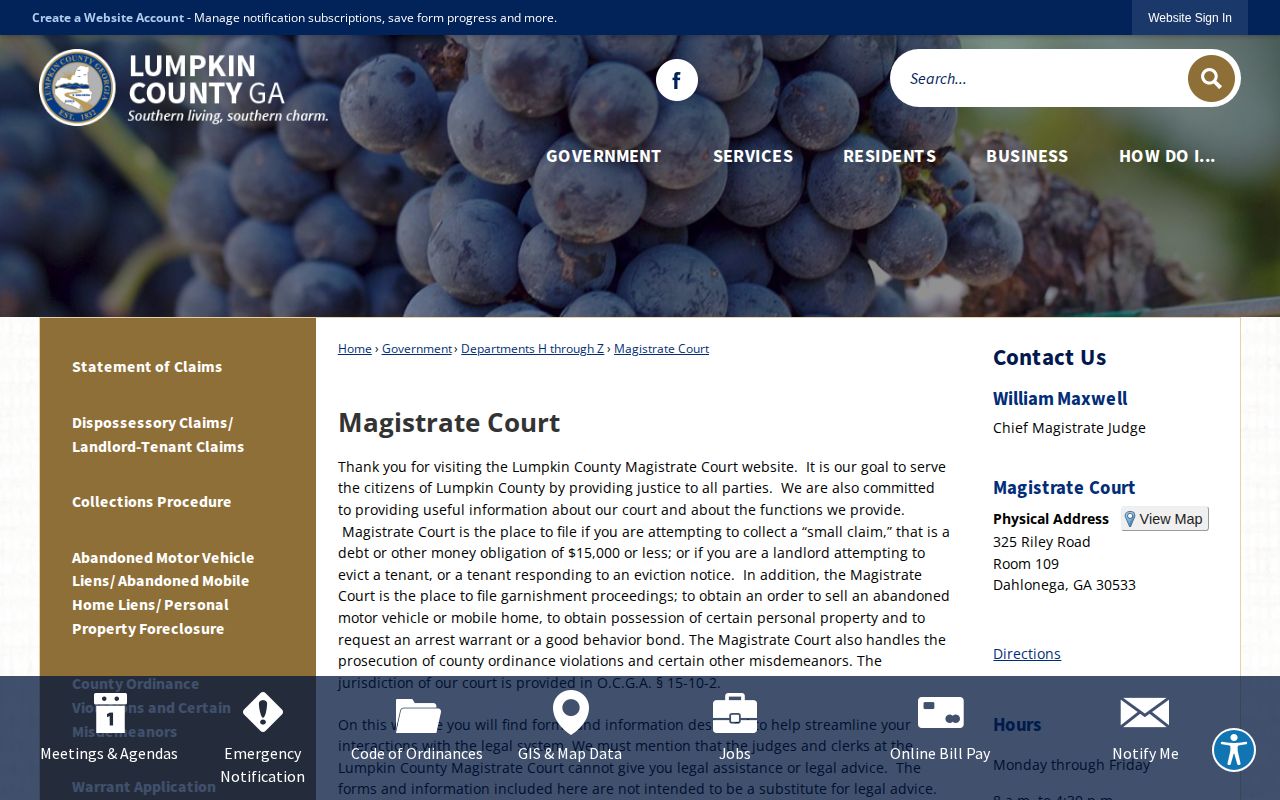
The criminal line is 706-864-7760. A warrant application hearing usually lands about three weeks after filing, subject to exceptions, and it determines probable cause rather than guilt. The official tip form is not a wanted list. It promises neither anonymity nor a reward. If there is danger, call 911 rather than approaching anyone. For legitimate questions, consult LCSO, the court, or an attorney.
How to Reconcile Arrest Sources
Start with the question. Is this person in the Lumpkin County Jail right now? Inmate Check answers that. The jail phone works when the portal is unclear. Was someone arrested during a specific week? The weekly local reports cover that, and an LCSO records request can confirm it. "What happened to the charge?" is a court question, so ask the clerk's file. Has custody changed? VINE tracks those events. Jumping between channels is not wasted effort, because each system records a different event under a different custodian. Updates land on their own schedules too.
That division explains why apparent conflicts usually are not real ones. A roster can show a Release Date after a person has left, while an older weekly report sits online unchanged. A court file may list a dismissal even when the historical report correctly notes the charge entered at booking. A VINE alert can describe a custody event without supplying the underlying report. Write down the source, the date checked, and the exact field label. That habit beats merging several systems into one shaky story.
For a careful note, record the URL, the publisher, the event date, the publication date, and the day you checked. Quote labels exactly. Tell a blank field apart from a confirmed negative. That small audit trail pays off later. It lets you revisit a changing custody entry, explain why a news archive differs, and ask the right custodian a focused follow-up about a Lumpkin County arrest record.
When the person is not on Inmate Check
Try spelling variants and a narrow date range. Even so, an empty result does not prove an arrest never happened. Lumpkin County makes no promise about how long released entries stay up. Intake sync timing is unpublished too. Not every agency event produces a county-jail entry either. For current custody, ask the jail. For documents, use the records process. For a filed criminal case, ask the clerk. If the person moved to state or federal custody, switch to the correct locator rather than re-searching the county portal.
Identity needs equal care. A shared name, a similar age, or the same town is not enough. Compare the official name, the arrest date, the held-for agency, and any booking or case number. Race, sex, and age are roster descriptors, not proof on their own. Never build a home address, a job, a family tie, or a criminal history out of a news summary. When accuracy matters, request the source record and keep the agency's own wording.
Publication delay and historical persistence
Lumpkin County runs on two publication clocks. The current roster shifts as intake and release are processed. The county posts no exact update-time promise. FetchYourNews publishes recurring multi-day LCSO reports, including a documented seven-day August 16–22, 2026 window. The Dahlonega Nugget has used a weekly issue format. A January 7–13, 2024 edition was organized by day. Those examples set a weekly rhythm. They do not fix a sheriff release hour. The same publication day is not guaranteed from week to week.
Archive depth is not government retention. A news article stays searchable after a person leaves jail. The roster, though, can change within hours. A broken publisher page proves little on its own. It does not mean the sheriff or court record was destroyed. For an older modern record, start with LCSO and the clerk. The Georgia Archives county index and Virtual Vault are leads for historical holdings. No sign exists that every modern Lumpkin booking photo has been moved there. Treat both as starting points for deeper arrest records, not endpoints.
County and city statistics are not arrest lists
LCSO's dated 2021 statistical report groups activity into categories like bench warrants, overdose calls, search warrants, and shoplifting. Dahlonega's monthly police reports summarize calls, incidents, accidents, traffic stops, and arrests. These documents answer trend questions only when the reporting period and agency stay attached. They do not name everyone arrested. They cannot set the current jail population either. Nor do they prove the county's busiest arrest day. Adding city figures to county figures invites overlap errors, since the measures and agency coverage can double-count the same activity.
Dahlonega's status shapes navigation. It is the only incorporated municipality in the official city/county material. The 2020 Census put its population at 7,537. Seasonal visitors and university life swell that base. That mix explains why the city police, the sheriff, local news, and the UNG log all surface in search results. It proves nothing about any arrest rate. The city reports stay aggregate. The UNG log lists campus incidents over a rolling 60 days and may note a disposition such as "closed by arrest." It is not a named county roster or a booking photo source.
After an Arrest: Court Outcomes
Release, bond, charging, and scheduling are separate processes. Court records matter because booking accusations often change. The Superior Clerk is at 325 Riley Road, Room 108, Dahlonega, 706-864-3736. Always pair an arrest entry with its later disposition and continue to presume innocence.
A warrant application supplies a particularly local illustration of this sequence. Lumpkin’s form describes a probable-cause hearing generally scheduled about three weeks after application, subject to statutory circumstances allowing a faster hearing. If a judge finds probable cause and issues a warrant, the accused may enter jail or post bond and the district attorney may later prosecute. None of those steps establishes guilt. The eventual court record may show an accusation, indictment, plea, dismissal, nolle prosequi, acquittal, sentence, or another procedural result.
The Magistrate Court and Superior Court therefore serve different parts of the path. Magistrate Court at 325 Riley Road, Room 109, handles arrest-warrant applications and has a criminal line at 706-864-7760. The Superior Court Clerk maintains criminal-file access and points users toward PeachCourt. Georgia Courts’ e-access directory explains that local records can be available through different providers. Call the correct office and describe whether the question concerns a warrant application, a current jail status, an agency report, or a filed court case.
State Prison and Federal Custody
GDC search covers state custody, not every Lumpkin County arrest. Its photos differ from county booking images too. Someone can leave the county jail without ever entering a state institution, so an empty GDC result proves nothing about an earlier local arrest. The reverse happens as well. A GDC record can remain available long after the county roster entry changes. Search by name or GDC identifier. Heed the agency's warning that many photographs have not been uploaded. When official status must be documented, request written verification from GDC Inmate Records.
VINE and the GDC Victim Information Program are separate notification systems. Georgia's statewide VINE deployment lets a user choose Georgia and the participating county or agency, search by name or identifier where supported, and register for phone, text, email, or app alerts. The state materials list 1-866-277-7477 and TTY 1-866-847-1298 as telephone options, along with a four-digit PIN for phone alerts. VINE is free. It runs around the clock. The GDC program instead concerns state prison and parole information.
The Federal Bureau of Prisons locator covers federal prisoners from 1982 forward. It is not a booking-photo gallery. It also may not show a federal pretrial detainee housed under another arrangement. Federal cases simply live elsewhere. The Marshals Service publishes no nationwide public booking feed. A federal arrest in Lumpkin County belongs on none of these lists, so don't force it onto the county roster or read anything into a blank BOP result.
ICE runs a different detainee locator. The A-number route needs the number plus country of birth. The biographical route uses identity details. People under 18 cannot be searched there. Immigration custody is separate from BOP imprisonment, state corrections, and the county jail. Use each system only for the custody population it actually covers, and contact the responsible agency when an online result is missing or unclear.
Photographs carry the same boundaries. A county roster photo, a GDC offender image, and a privately republished picture may come from different dates and records. Don't substitute one for another. Don't imply a federal system supplies a county mugshot. Whenever the source or outcome is uncertain, return to the booking-photo guidance and the court file.